Porcini do not grow in random places. They live in symbiosis with particular trees and like a specific level of moisture and warmth, so experienced foragers first assess the forest and pick out the places where porcini can grow. You can learn this skill faster than you might expect.
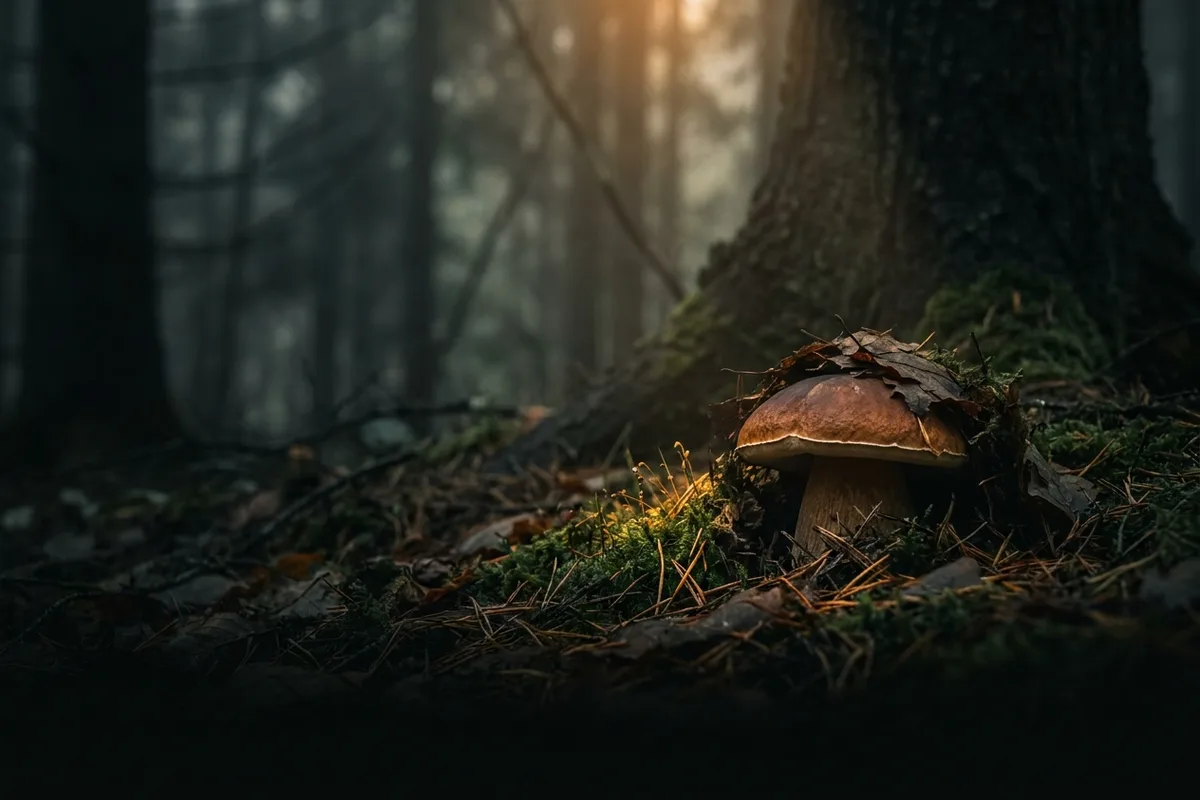
Which trees porcini live with
The porcini forms mycorrhiza, a root symbiosis, with several tree species. In Polish forests you will most often meet it under spruce, pine, oak and beech. This is why the same mushroom looks a little different in a pine wood, a spruce stand or an old beech grove. The tree is the first clue: without the right tree species, no porcini will grow.
Search above all at forest edges, in clearings, along the margins of forest tracks and in places where the stand thins out and more light reaches the forest floor. The soil there warms up faster after a cold night, and warmth triggers fruiting. Old stands give larger and more reliable harvests than young growth.
When to go out
The porcini season in Poland usually runs from July to October, with a clear peak in September. The weather, however, matters more than the calendar. The best moment is one to two weeks after a heavy, warm rain, once the mycelium has had time to set fruit bodies and the temperature has not yet dropped too low.
Moisture: a porcini needs rain, but waterlogged soil does not suit it. The first fruit bodies usually appear about a week after heavy rainfall, and most come up between day 7 and day 12.
Warmth: warm nights and moderately warm days speed up fruiting, while the first cold snaps can stop it.
Time of day: go out early, before others find the mushrooms and the sun dries the litter.
Rhythm: after a good rain the fruit bodies come up in waves, so return to the same spot a few days later.
The guide explains why fruit bodies appear one to two weeks after rain rather than the next morning, and how to use the weather of the past few days to judge whether a weekend trip is worth it.
What to look for in the forest litter
The porcini likes places with moss, a thin layer of litter and a little light. Search slowly: instead of sweeping your gaze across the whole forest, stop at promising cushions of moss at the base of old spruces and oaks. The distinctive chestnut cap often barely shows from under the needles, and you will recognise it more easily by its shape and sheen than by its colour.
Moss and bilberry patches around old trees are typical porcini spots.
Track edges, clearings and thinned areas warm up faster, so mushrooms appear there earlier.
If you find one porcini, stop and look around, because porcini rarely grow alone.
Remember where you found them, because the mycelium is perennial and fruits in the same spot every season.
Keep your own map of spots. An app that logs finds with a GPS location collects this information in one place: after two or three seasons you can see on the map which places fruit reliably, and you know where to go a week after the first warm rain.
The mushroom you pick is only the fruit body of the mycelium, which lives in the soil. Twist or cut the fruit bodies, do not rake through the litter and do not damage the spot. Leave old and maggoty specimens, because they spread spores. That way the same patch will keep fruiting for years.