Foraging is safe as long as you follow a few simple rules. Most poisonings result from haste, overconfidence or belief in home tests that do not work. The seven habits described below let you forage calmly and reduce the risk of poisoning.
The rules below do not replace knowledge of specific species, but they help you apply that knowledge safely. Treat them as a checklist that you will eventually go through automatically.
Pick only what you know for certain. If you are not completely sure of the species, leave the mushroom in the forest. A mushroom left behind will not harm anyone, while a misidentified one can cause poisoning.
Get to know the whole fruit body. Dig the mushroom out with the base of the stem, look at the cap, the gills or pores, the stem, the ring and any volva. The features that matter most for safety are often found at the bottom of the fruit body.
Collect young, healthy specimens. Old, collapsing and maggoty fruit bodies are harder to identify and spoil faster. Let them spread their spores.
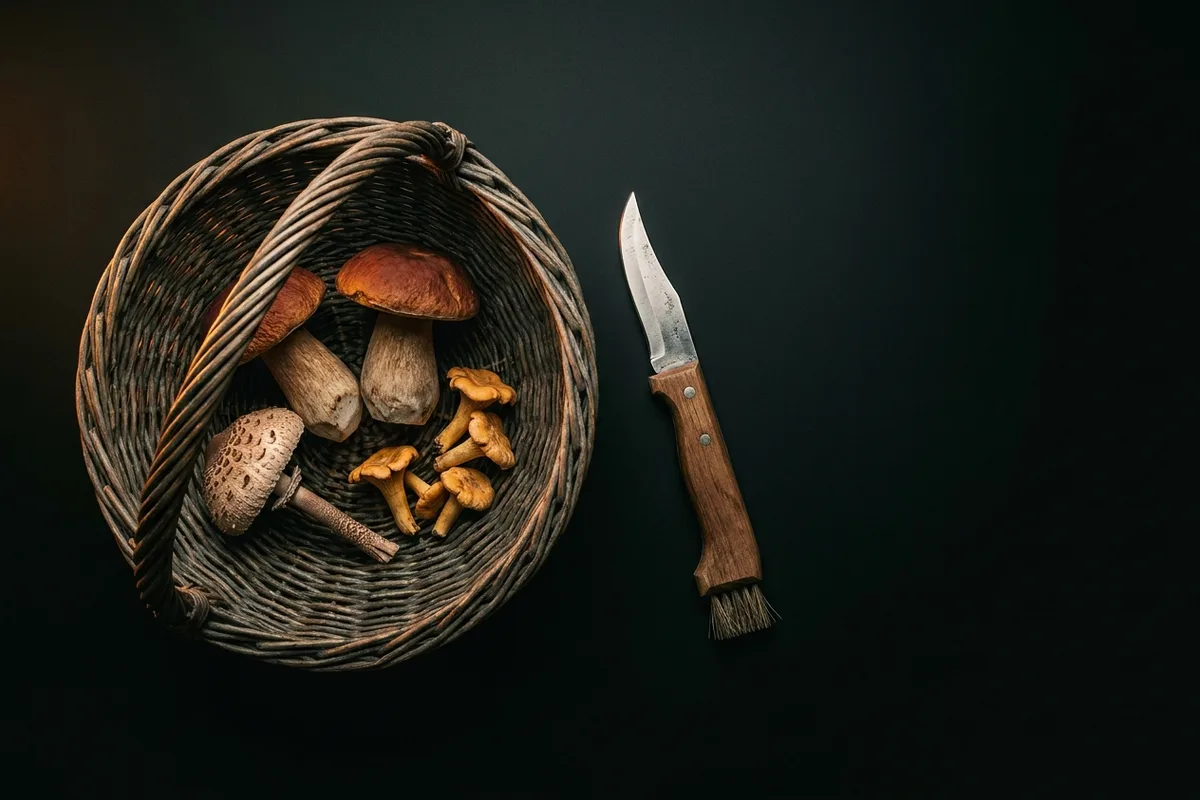
Collect mushrooms in an airy basket instead of a plastic bag. In a bag, mushrooms sweat, rot and lose freshness faster. A wicker basket airs the harvest and scatters spores along the way.
Do not trust home tests. Onion, a silver spoon, garlic or milk will not detect poison. These are widespread myths that have cost people their health and their lives.
When in doubt, ask an expert. In many places there are mushroom advisers who will check your harvest for free. Consult them before anything goes into the pan.
Try a new species in a small amount. The first time you eat a given mushroom, eat only a little and do not mix several new species at once. People react differently, and a test portion makes it easier to link any reaction to a specific mushroom.
The most dangerous poisonings, such as death cap poisoning, usually produce their first symptoms only 6 to 24 hours after the meal, by which point the toxins are already at work. If nausea, stomach pain, diarrhoea or vomiting appear after a meal with mushrooms, do not wait. Contact medical help and, if possible, keep the leftover mushrooms for identification.
Respect for the forest is a separate matter that does not concern safety directly. Harvest in moderation, do not damage the mycelium, do not dig up the litter, and leave the forest as you would like to find it a year from now. A good spot that you look after will fruit for many seasons.
A recognition app is a useful learning tool, because it shows the features to check and the toxic lookalikes alongside the result. It serves as an assistant, however, and you make the final decision to pick and eat by combining the hint with your own observation of the mushroom in your hand.