A foraging companion
Find.Identify.Save.
Find.
Identify.
Save.
Grzybiarz is a mobile app for mushroom foragers. Its on-device AI helps you spot fruiting bodies in the leaf litter and suggests a species from a photo, and the app keeps a private map of your finds. Everything runs on your phone and works fully offline in the forest without signal.
Armillaria melleaArmillaria mellea
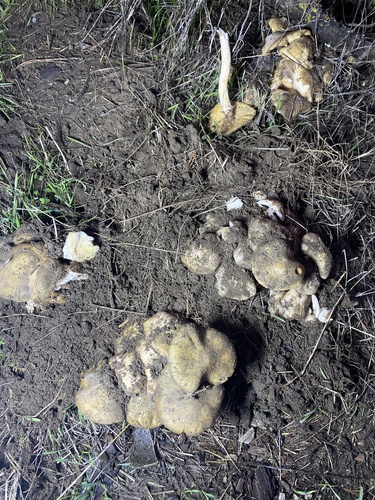
conditionally edible
Armillaria melleaArmillaria mellea
Habitat
deciduous forests
mixed forests
under oaks
beech forests
Season
from September to November
Physalacriaceae
3–15 cm
Season
At its peakThe peak lasts until early November and the season usually until late November.Today · 22–28 Oct100% of peak
how often reportedpeak
Season
Sep–Nov
Peak
Oct–Nov
Reports
691Poland and neighbours
Risk window
Sulphur Tuft grows at the same timeBoth species grow together for about 10 wk a year. Most strongly from mid-October to late October.
Key features
Cap honey yellow to brown with fine dark scales in the central part; grows in clusters at the base of deciduous trees. Gills whitish, running down the stem; stem with a white ring; must be parboiled.Similar (be careful)Confusions documented in our database
Sulphur TuftHypholoma fasciculare
toxic
Start
Scan
Atlas
Map
More
scroll
Grzybiarz
Grzybiarz is a foraging assistant; the decision to harvest is yours.